GetUSB.info Logo

Why Your USB Drive Shows Up as Two Disks: LUNs vs Partitions Explained

Why your USB drive shows up as two disks

When One USB Drive Shows Up as Two: What’s Really Going On

At some point you’ve probably plugged in a USB flash drive and thought, “Why are there two drives showing up?” Or maybe Windows refused to delete a mysterious read-only volume. Or Disk Management showed something you couldn’t remove no matter how many times you formatted. These moments usually lead to confusion, frustration, and a lot of bad advice online.

The issue almost always comes down to misunderstanding two concepts that sound similar but live in very different layers of storage behavior: Logical Unit Numbers (LUNs) and partitions. Once you understand the difference, a lot of strange USB behavior suddenly makes sense.

Continue Reading

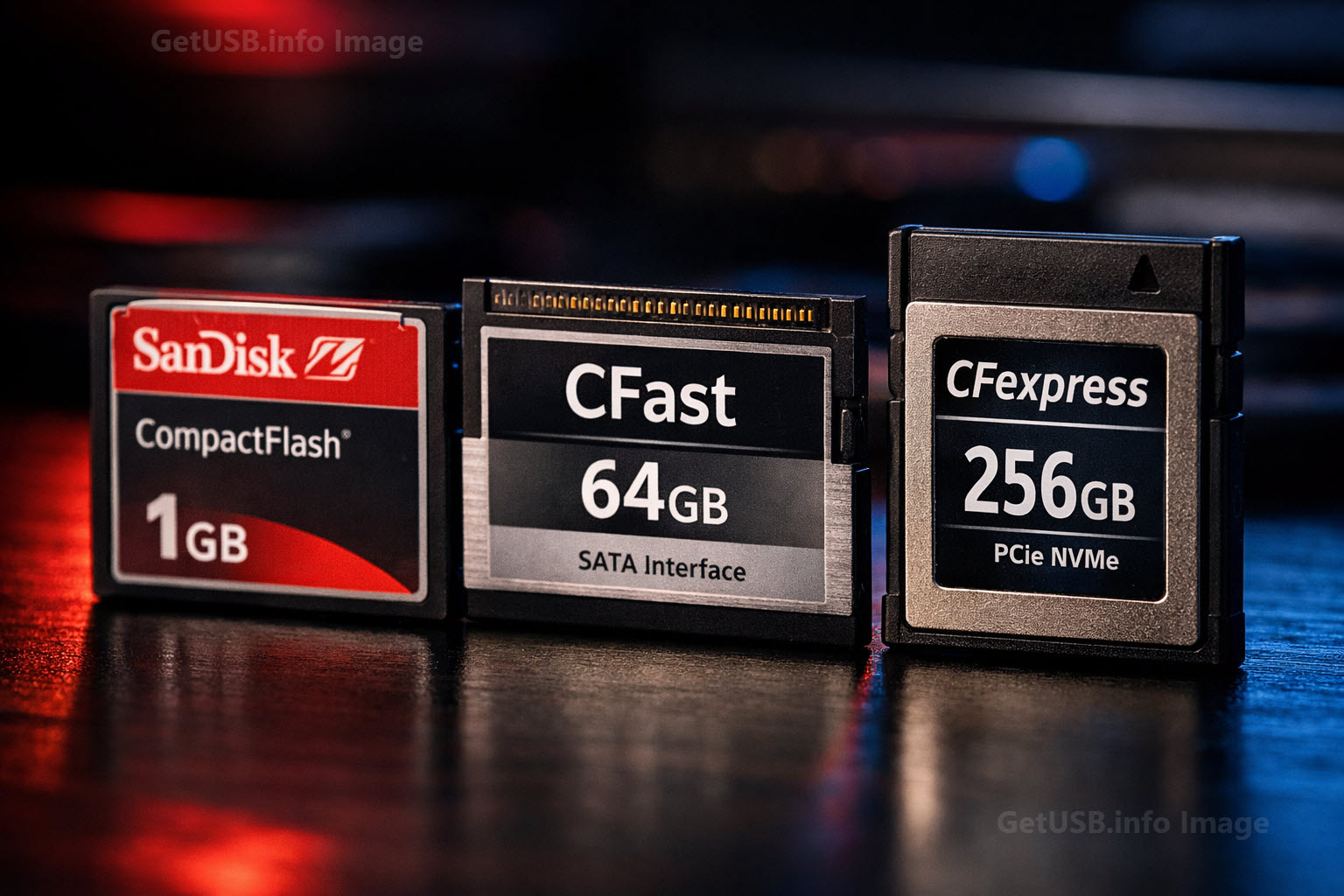
CompactFlash: The OG of Portable Storage

CompactFlash card as portable storage

CompactFlash is The “Original Gangster” of Portable Storage That Quietly Built the Foundation for Today’s Removable Media

Pull up a stool, grab whatever’s in the glass, and let’s talk about a piece of technology that doesn’t get nearly enough respect. Everyone thinks the USB flash drive is the hero of portable storage. That tiny plastic stick that lives on your keychain. The one you’ve lost twelve times. But the real origin story? That goes further back. Before USB was cool. Before laptops were thin. Before cameras shot video. The real OG of modern portable storage was CompactFlash.

CompactFlash showed up in 1994, which doesn’t sound that old until you remember what the tech world looked like in 1994. Dial-up modems. Beige towers. Laptops that felt like gym equipment. Storage was floppy disks, Zip drives, and spinning rust hard drives. Flash memory existed, but it was exotic. Expensive. Mostly for embedded systems and industrial gear. Then SanDisk rolled out CompactFlash and quietly changed the entire trajectory of removable storage.

Continue Reading

Why microSD Cards Get Slower Over Time — And What You Can Do About It

Warehouse conveyor backlog illustrating why microSD cards slow down over time

The performance drop most people blame on “bad cards” is usually normal behavior.

If you’ve ever had a microSD card that felt fast when it was new but frustratingly slow a year later, you’re not imagining things. This is a real, measurable behavior in flash storage, and it happens even with reputable brands. The important part is this: most of the time the card isn’t “broken.” It’s just working harder internally than it used to. In fact, real-world reporting shows reliability issues across removable flash are becoming more common, with USB flash key failures increasing by over 300% in recent years.

The slowdown usually comes from the way flash memory manages itself over time, not from sudden damage. And once you understand what’s happening inside the card, you start to see why some use cases age gracefully while others fall off a performance cliff.

A simple mental model helps.

Think of your microSD card as a warehouse

Picture your microSD card as a warehouse full of boxes. Each box represents a piece of data. The shelves are the flash memory. The warehouse manager is the controller inside the card. The manager has one annoying rule they must follow: once a box is placed on a shelf, it cannot be edited. If something changes, a new box must be placed somewhere else and the old box is marked as obsolete.

That rule isn’t a metaphor. That’s how NAND flash actually works. Flash cannot overwrite data in place. Every change becomes a new write somewhere else.

Early on, the warehouse is empty. There’s space everywhere. New boxes get placed quickly. The manager barely has to think. Performance feels fast and effortless.

Over time, more shelves fill up. Old boxes pile up. Some shelves contain a mix of useful boxes and obsolete ones. Now the manager has more work to do. They must constantly decide which shelves can be cleaned, which boxes must be moved, and where new boxes can go. That housekeeping work happens in the background, but it competes directly with your read and write requests. That’s where performance starts to slide.

Continue Reading

Dirty USB Ports: A Small Problem That Causes Big Headaches

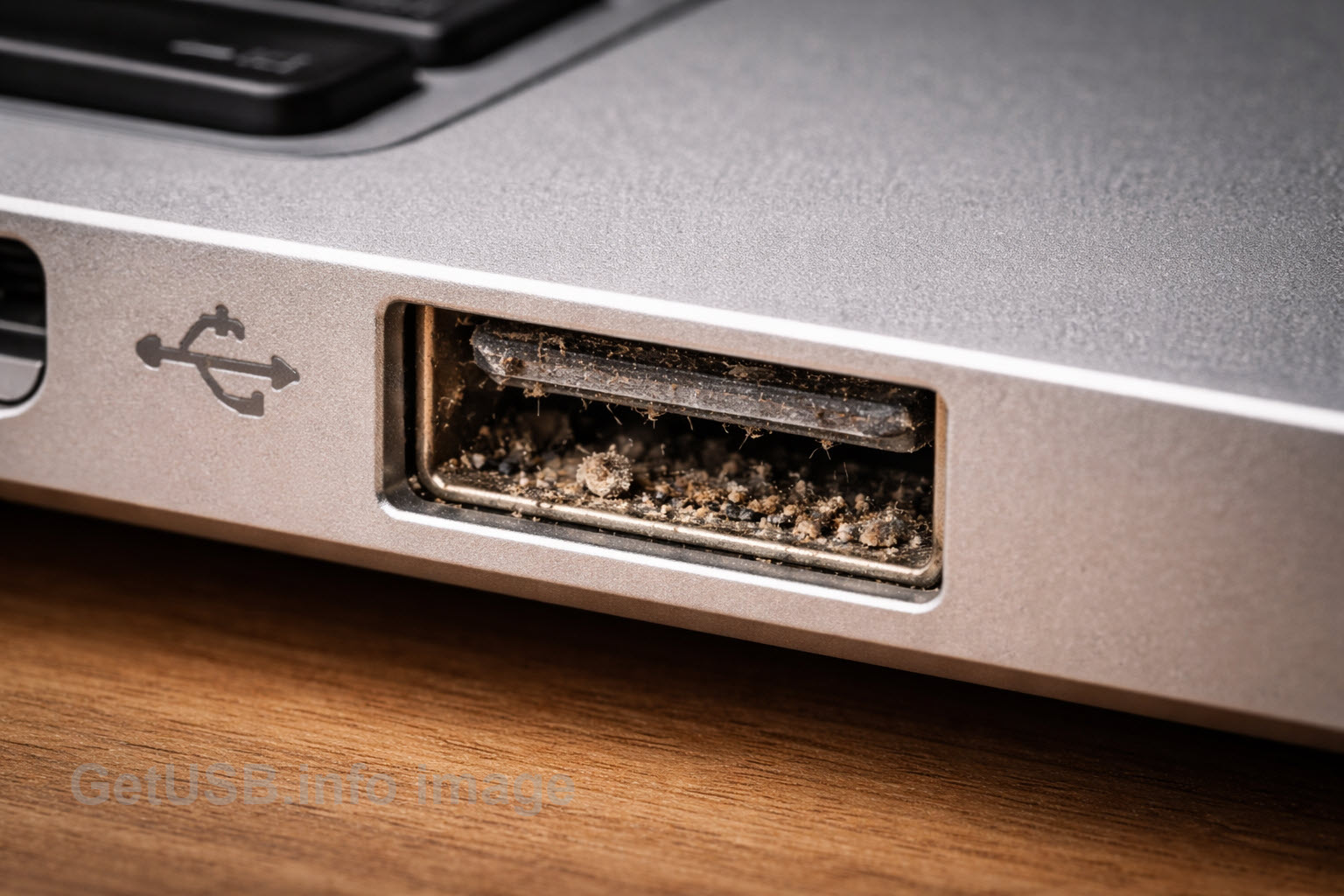
Dirty USB ports causing connection and power issues

At first glance, this USB port looks normal. But a closer look reveals compacted dust, fibers, and residue sitting directly on the contact surface. This kind of contamination doesn’t usually cause immediate failure. Instead, it creates unstable electrical contact that leads to intermittent disconnects, unreliable charging, slower transfer speeds, and unexplained device behavior. Ports don’t need to look “packed with dirt” to cause problems — a thin layer of debris is often enough.

USB Hygiene: How Dirty Ports Cause Disconnects, Data Errors, and Premature Wear

USB is one of those everyday technologies that “just works” right up until it doesn’t. A flash drive disconnects mid-copy. A phone charges only if the cable sits at a certain angle. A USB 3.0 device suddenly behaves like USB 2.0. In many cases, the root cause isn’t a bad device at all — it’s contamination in the port, on the cable plug, or on the flash drive connector.

This article covers the practical side of USB hygiene: what dirt and residue actually do, where contamination comes from, how often ports should be inspected, and how to clean safely without damaging the connector. If you work in high-volume environments (like USB duplication stations), we’ll also cover why hygiene becomes part of the workflow instead of a troubleshooting step.

What a Dirty USB Port Really Causes

USB connectors rely on tiny contact surfaces and tight tolerances. When dust, lint, oils, oxidation, or residue get in the way, you don’t always see a total failure. You get unstable behavior: a device disconnects and reconnects, a transfer slows down, charging becomes inconsistent, or a USB 3.0 device negotiates down to USB 2.0 speeds.

The data risk is simple. Unstable connections cause retries and errors during transfers. Over time, that increases the chances of incomplete writes and file system damage — especially on removable media like FAT32 or exFAT flash drives. This is why dirty ports often get misdiagnosed as “bad drives” or “flaky cables” when the real issue is the connector.

How USB Ports, Plugs, and Cable Ends Get Dirty

Continue Reading

Should You Self-Host Your Password Manager? A Clear-Eyed Decision Checklist

Should you self-host your password manager

A practical, printable checklist to help you decide whether running your own password manager makes sense for your habits—not your optimism.

Password managers have moved from “nice to have” to “you really should be using one.” Most of us carry dozens (or hundreds) of logins across work, banking, shopping, utilities, and personal accounts. The problem isn’t that people don’t care about security. The problem is that humans are terrible at managing unique, strong passwords at scale. We reuse passwords. We choose passwords that feel memorable. We fall for a convincing phishing page once in a while. A password manager is one of the few tools that actually bends the odds in your favor: it generates strong passwords, stores them safely, and fills them reliably so you don’t have to rely on memory.

The current frustration is that many password managers keep their most useful features behind a paywall. Even good, respected options do it. Bitwarden is often held up as the king of open-source password managers, and it deserves the praise: the core product is excellent and the company pricing is fair. But “fair” isn’t the same as “free.” A common example is integrated authenticator features (Time-based One-Time Passwords, or TOTP) being part of a paid tier. That leads to a very tempting idea: if the software is open-source, can you run the whole thing yourself and get the best of both worlds?

That’s where the self-hosting trend comes in. The promise is simple: instead of syncing your encrypted password vault to a company’s infrastructure, you run your own private server and your devices sync to that. You keep the familiar apps and browser extensions, but the “cloud” is your hardware. Some people do this on a small always-on computer like a Raspberry Pi, often using Docker to run the password server cleanly and repeatably. The appeal is real: fewer third-party dependencies, more control, and sometimes fewer ongoing fees.

The part that gets glossed over is what you are actually trading. Hosted password managers don’t charge you only for a feature checkbox. They charge you for operations: uptime, updates, backups, monitoring, redundancy, and a safety net when things break. Self-hosting is not primarily a money-saving hack. It’s a decision to become your own tiny IT department for one of the most important systems in your life. That can be a great fit for the right person and a quiet disaster for everyone else.

If you’ve been around GetUSB long enough, you already know the bigger theme here: control and custody. We’ve written about security hardware, authentication ideas, and the “lock down” mindset for years. For example, our older posts touch on security and control concepts in different forms—like locking strategies (Crack Down on Your Lock Down) and authentication tokens (Network Multi-User Security via USB Token). A password manager is different technology, but the same question keeps showing up: do you want to outsource critical trust to a provider, or keep it under your roof?

What “Self-Hosting” a Password Manager Actually Means

A modern password manager is really two things: the client apps (browser extension, mobile app, desktop app) and the backend service that stores and syncs your encrypted vault. In a hosted model, the provider runs the backend for you. In a self-hosted model, you run it. Your client apps still do the heavy lifting: they encrypt the vault locally and decrypt it locally. The server mainly stores encrypted blobs and coordinates syncing across devices.

Continue Reading

Speed Is Easy. Reliability Is Hard: USB vs Ethernet

Speed is easy, reliability is hard: USB vs Ethernet

USB vs Ethernet: Speed Is Easy — Reliability Is the Real Conversation

Every comparison between USB and Ethernet tends to start the same way. Someone pulls up a chart. Someone circles a number. Someone declares a winner.

And most of the time, USB wins that opening round.

Modern USB is fast — sometimes surprisingly fast. With a short, good-quality cable and a single device on the other end, USB can move data at speeds that traditional Ethernet links struggled to reach for years. That’s real, and it’s worth acknowledging up front.

But speed is the easy part of the discussion.

Speed is what you measure when everything is new, clean, short, and cooperative. Reliability is what you discover months later, after cables have been bent, ports have loosened, and users have interacted with the system in ways no spec sheet ever imagined.

That’s where the USB vs Ethernet conversation stops being about benchmarks and starts being about reality.

What USB Was Designed For — and What We Ask It to Do Today

USB was originally designed as a peripheral bus. One host. One device. Short distances. Tight timing. Predictable power delivery. Everything about the architecture assumes proximity and control.

When USB stays inside those assumptions, it performs extremely well.

The problem is that modern USB has drifted far beyond its original job description.

Today, a single USB cable is expected to move high-speed data, deliver meaningful power, negotiate voltage and current, identify itself, sometimes authenticate capabilities, and do all of this through a connector small enough to fit in a phone. In the case of USB-C, the cable itself may even contain active electronics.

That’s not a flaw — it’s an evolution. But it’s also a stress test.

The protocol grew faster than the physical layer supporting it, and that gap shows up not in lab tests, but in support tickets.

Continue Reading

The Shop Vac USB Flash Drive That Sucks Up Attention (In the Best Way)

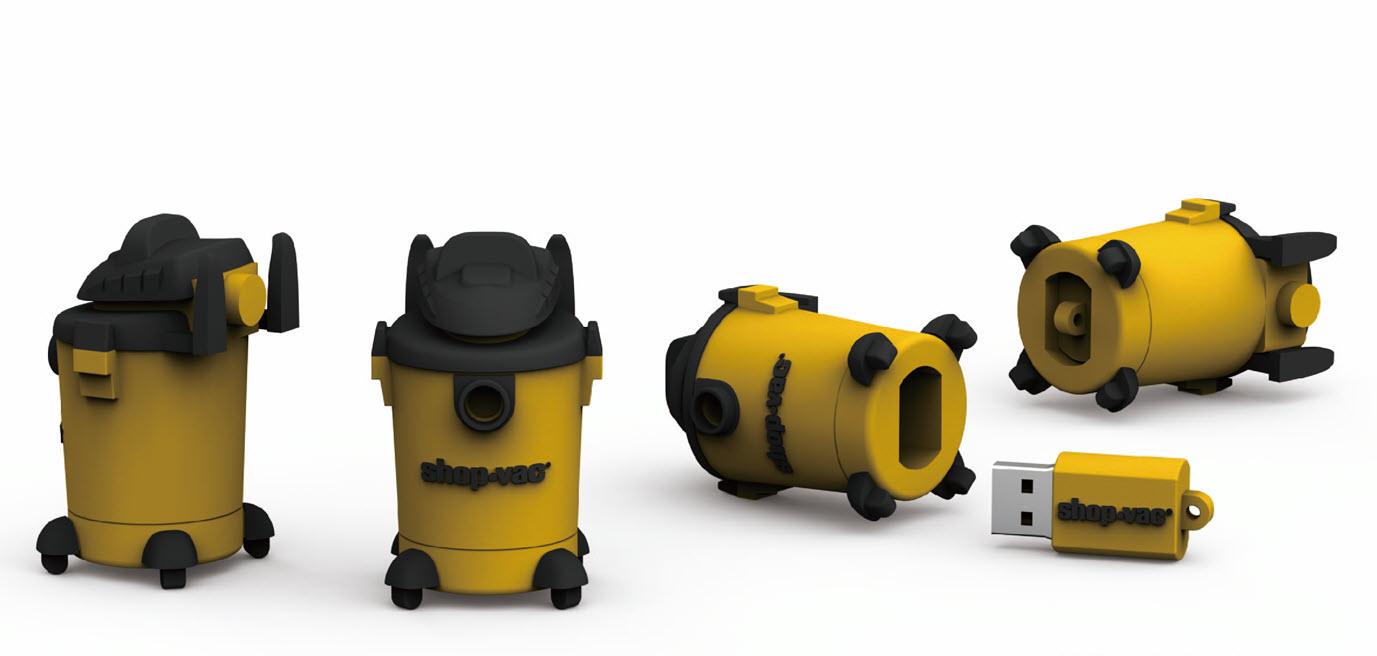
Custom flash drive shop vacuum setup

The Shop Vac USB Drive That Shows Up and Gets the Job Done

Let’s be honest: nobody gets excited about another plain black rectangle with a USB connector. But a miniature shop vac that happens to store your files? That gets picked up. That gets shown around. That earns a spot on the desk instead of vanishing into the junk drawer of forgotten swag. This design doesn’t whisper for attention—it rolls in like a little yellow machine with a job to do.

Continue Reading

MD5 Verification and USB Flash Drives What Actually Matters (and what doesn’t)

MD5 verification and USB flash drives

Understanding the Difference Between File Verification and Device Verification

If you’ve worked with USB duplication long enough, you’ve probably heard conflicting advice about MD5, SHA, disk signatures, and “bit-for-bit” verification. Some of it sounds overly academic. Some of it sounds like marketing. And some of it is simply wrong.

The problem usually isn’t that the tools are confusing. It’s that the goal is rarely clarified up front. One person wants confidence a video file copied correctly. Another needs a bootable USB that behaves the same across hundreds of machines. Someone else cares about audits, traceability, or repeatable production.

This article focuses on what matters in practice: what changes between USB drives, when verification is meaningful, and why the method of verification often matters more than the algorithm.

File-Level Verification

For most people, verification simply means wanting confidence that files arrived intact. If you’re sending a video to a client, distributing software to customers, or archiving project data, the concern is straightforward: did anything change during the copy?

Continue Reading

Why “Active Ingredients” Matter (and How to Spot When They Don’t Exist)

Does Nutrafol work analysis of active ingredients and effectiveness

Does Nutrafol Work?

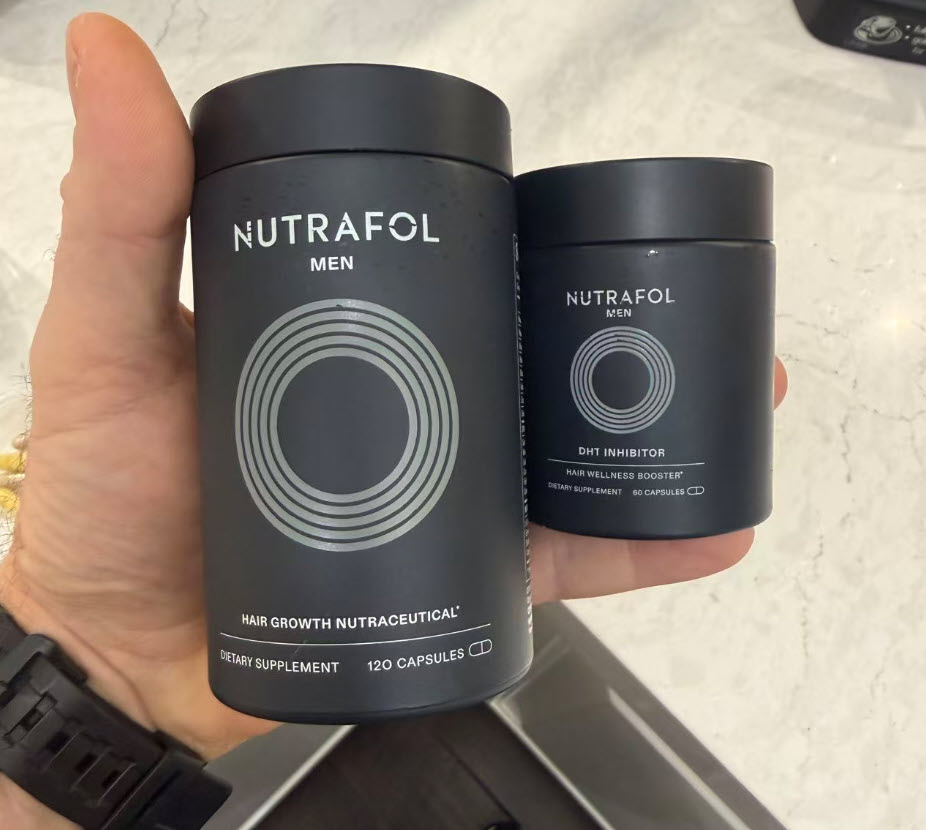
This article is not written to criticize Nutrafol as a company, nor to tell anyone what they should or should not buy. It is written from the perspective of a consumer who used Nutrafol Men alongside the Nutrafol Men DHT Inhibitor consistently for over one year, at a combined cost of roughly $120 per month, and did not experience any measurable or meaningful improvement in hair density, regrowth, or reduced thinning.

When a product requires long-term use and a significant financial commitment, it is reasonable to ask what the active mechanism actually is — and whether the expected outcome aligns with how the product works biologically. That question matters in any industry, whether the product is software, hardware, or a health-related supplement.

At GetUSB.info, our approach is not new. Our work has always focused on explaining how technology actually functions beneath the surface — whether that is USB flash drive controllers, NAND memory behavior, data verification, or professional duplication systems. We routinely separate marketing claims from measurable behavior and documented mechanisms. Applying that same standard of evaluation to an off-topic consumer product may seem unusual, but the underlying principle is identical: if the active mechanism is unclear or indirect, expectations should be adjusted accordingly.

Continue Reading

USB-Rechargeable AA & AAA Batteries: Are They Really Better Than Disposable?

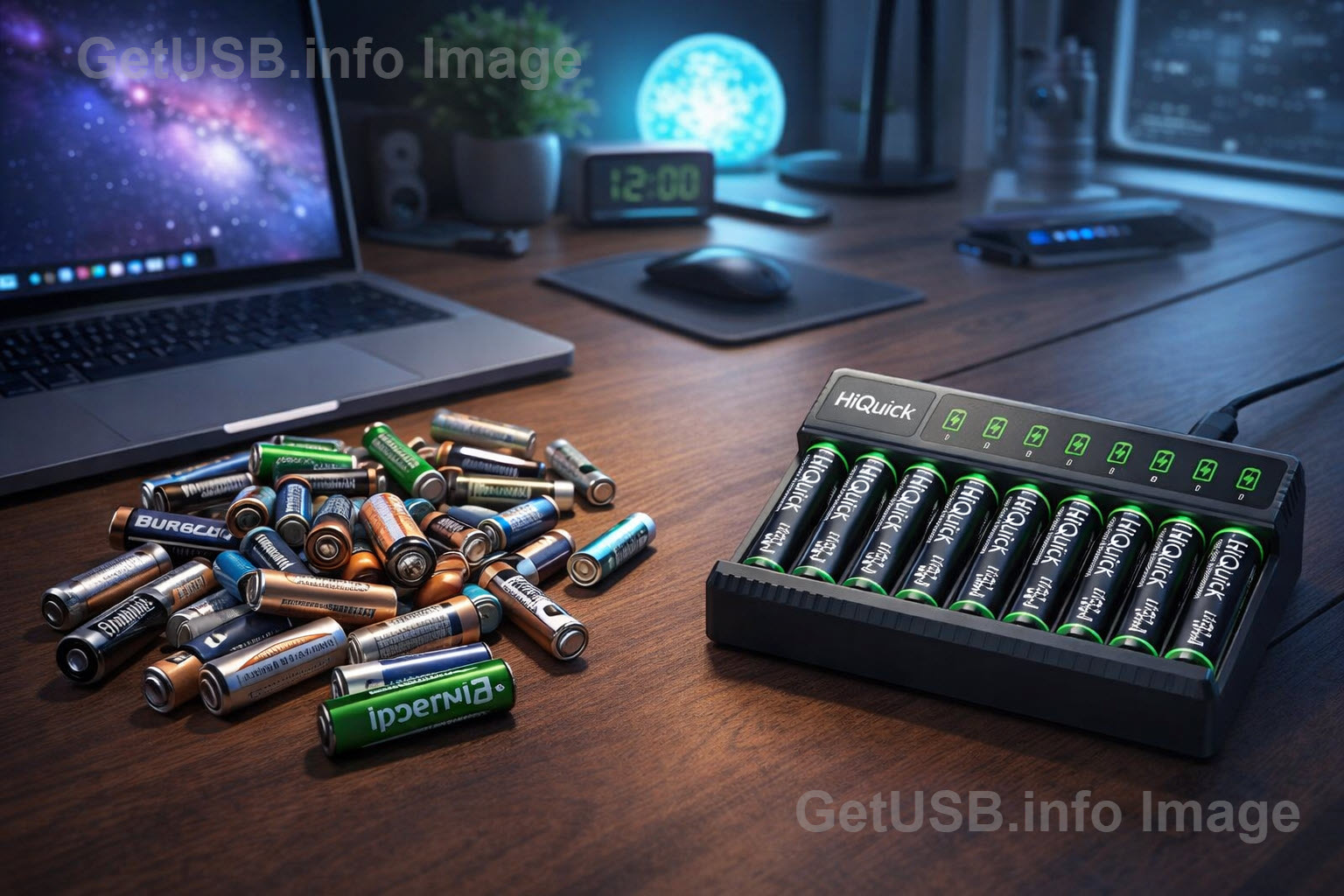
USB rechargeable AA and AAA batteries compared to disposable batteries

A practical look at battery life, power delivery, and why USB charging changes the equation.

AA and AAA batteries quietly power a surprising amount of modern life. From TV remotes and flashlights to wireless keyboards, toys, and test equipment, these small cells sit behind countless everyday tasks. For decades, disposable alkaline batteries were the default choice. You bought a pack, used them until they died, then tossed them in a drawer or the trash and bought more.

That habit made sense when rechargeables were inconvenient, slow, and unreliable. But that era is over. Today’s rechargeable AA and AAA batteries — especially those that charge directly over USB — have fundamentally changed how practical reusable power can be.

To understand why, it helps to break the discussion into two parts: the difference between AA and AAA sizes, and the difference between disposable and rechargeable chemistry.

AA and AAA batteries share the same basic voltage class, but they are not equal. AA batteries are physically larger, which means they can store more energy. A typical AA disposable battery can hold roughly two to three times the capacity of a AAA battery. In real terms, this means an AA battery usually lasts much longer than a AAA battery in the same type of device.

Voltage, however, tells only part of the story. Disposable alkaline batteries start at about 1.5 volts, but their voltage steadily drops as they discharge. Rechargeable NiMH batteries are rated at about 1.2 volts, which sounds worse on paper but behaves very differently in practice. Rechargeables tend to deliver steadier voltage for most of their discharge cycle, while alkalines slowly fade.

This difference matters because many modern devices care more about voltage stability than peak voltage. A rechargeable battery may appear “weaker” by the numbers, but in moderate- to high-drain devices, it often delivers more usable energy before the device shuts down.

Continue Reading

Wishing You a Merry Christmas — Stored in Good Hands

USB Christmas Tree made from flash drives

Every year around this time, we look back at what caught our attention, what surprised us, and what quietly reshaped how we think about USB, storage, and the way data moves through our lives.

So instead of a traditional holiday post, we took inspiration from a familiar tune and reflected on twelve ideas that stood out across our recent articles — the stories, lessons, and oddities that made this year interesting.

Here’s our take on The 12 Days of Christmas, GetUSB-style.

On the First Day of Christmas

One reminder that not all flash memory is created equal.
Performance numbers look great on paper — reliability is earned over time.

On the Second Day of Christmas

Two very different meanings of “fast.”
Burst speed is easy. Sustained performance under real workloads is not.

On the Third Day of Christmas

Three ways USB still surprises us.
From unexpected form factors to creative use cases, this interface keeps evolving.

On the Fourth Day of Christmas

Four reasons physical media still matters.
Offline storage, controlled distribution, predictable behavior, and longevity.

On the Fifth Day of Christmas

Five failure points nobody talks about.
Controllers, NAND quality, firmware, power loss, and human behavior.

On the Sixth Day of Christmas

Six devices pretending to be something else.
USB gadgets that blur the line between storage, security, and novelty.

On the Seventh Day of Christmas

Seven lessons learned from broken flash drives.
Most data loss stories start small — and end the same way.

On the Eighth Day of Christmas

Eight ways USB shows up where you don’t expect it.
Cars, medical devices, cameras, kiosks, toys, tools, and places you’d never guess.

On the Ninth Day of Christmas

Nine myths about copy protection.
Security isn’t a checkbox — it’s a design decision.

On the Tenth Day of Christmas

Ten years of watching CDs quietly disappear.
And USB step in — not loudly, but effectively.

On the Eleventh Day of Christmas

Eleven examples of USB doing exactly what it promised.
Simple, universal, and still relevant decades later.

On the Twelfth Day of Christmas

Twelve months of stories worth sharing.
From clever ideas to cautionary tales — all part of the same ecosystem.

A Final Note

Thank you for reading, bookmarking, sharing, and occasionally questioning what we publish. GetUSB.info exists because people still care about how technology actually behaves — not just how it’s marketed.

If you’re new here or just browsing again over the holidays, you can always start at the homepage and wander from there:

https://www.getusb.info/

From all of us,
Merry Christmas and Happy Holidays.
We’ll see you next year — same port, same curiosity.


Continue Reading

Storing Data in Living Protein Isn’t Science Fiction Anymore

Storing data in living protein is no longer science fiction

Scientists are experimenting with biological systems as a new medium for long-term data storage

Every few years, someone declares that we’re “running out of storage.” Scientists tend to respond the same way every time: Fine — we’ll just store data in glass… or DNA… or a living brain.

And no, they’re not joking.

Once you step outside the familiar world of silicon and NAND flash, data storage stops looking like chips and circuit boards and starts looking like something pulled from a biology lab, a physics experiment, or a science-fiction novel. What’s striking is that none of this is theoretical hand-waving. In one form or another, every idea you’re about to read has already been demonstrated in real labs—often working far better than intuition would suggest.

Let’s start with one of the least intuitive ideas that, once you sit with it, actually makes a lot of sense: DNA.

DNA already stores information. That’s literally its job. Every cell in your body carries a complete instruction manual for building you, written in a four-letter code. Scientists eventually realized that if biology can store that much information so densely and reliably, maybe we can piggyback on the same system.

By translating binary data into combinations of A, C, G, and T, researchers have already stored books, images, movies, and even entire operating systems inside synthetic DNA strands. The density is absurd. A single gram of DNA could theoretically hold hundreds of petabytes of data. Stored correctly, it could last thousands of years.

The catch, of course, is speed. Writing and reading DNA is slow and expensive, so this isn’t replacing your SSD anytime soon. But as a long-term archive, DNA starts to look less like a novelty and more like a biological vault.

Once you accept that molecules themselves can store data, proteins are the next logical step—and this is where things start getting strange.

Proteins don’t just sit there; they fold. The exact way a protein folds determines how it behaves, and in some cases, that folding can change in stable, repeatable ways. Scientists have engineered proteins that flip between multiple shapes, with each shape representing a different data state. In effect, a single molecule becomes a microscopic switch.

Cells already use this trick to “remember” past signals, so researchers are essentially hijacking biology’s own memory system. This idea isn’t even new. Nearly two decades ago, experiments were already showing how biological proteins could be used to store staggering amounts of data, long before “bio-storage” became a buzzword.

It works, but it’s fragile. Temperature, chemistry, and time all interfere. Still, the notion that information can be stored in the way a molecule curls up on itself is one of those ideas that tends to stick in your brain.

Continue Reading

Copyright

Copyright © 2006 +

USB Powered Gadgets and more...

All Rights Reserved

Advertise with us

GetUSB Advertising

This is a high value website providing great exposure to your product and brand. Visit our advertising page to learn specifics.

For more information
Visit our advertising page.

Nexcopy Ad

Nexcopy Provides

USB copy protection with digital rights management for data loaded on USB flash drives.

Contact us learn more

Resources and References Page

Resources and References Page